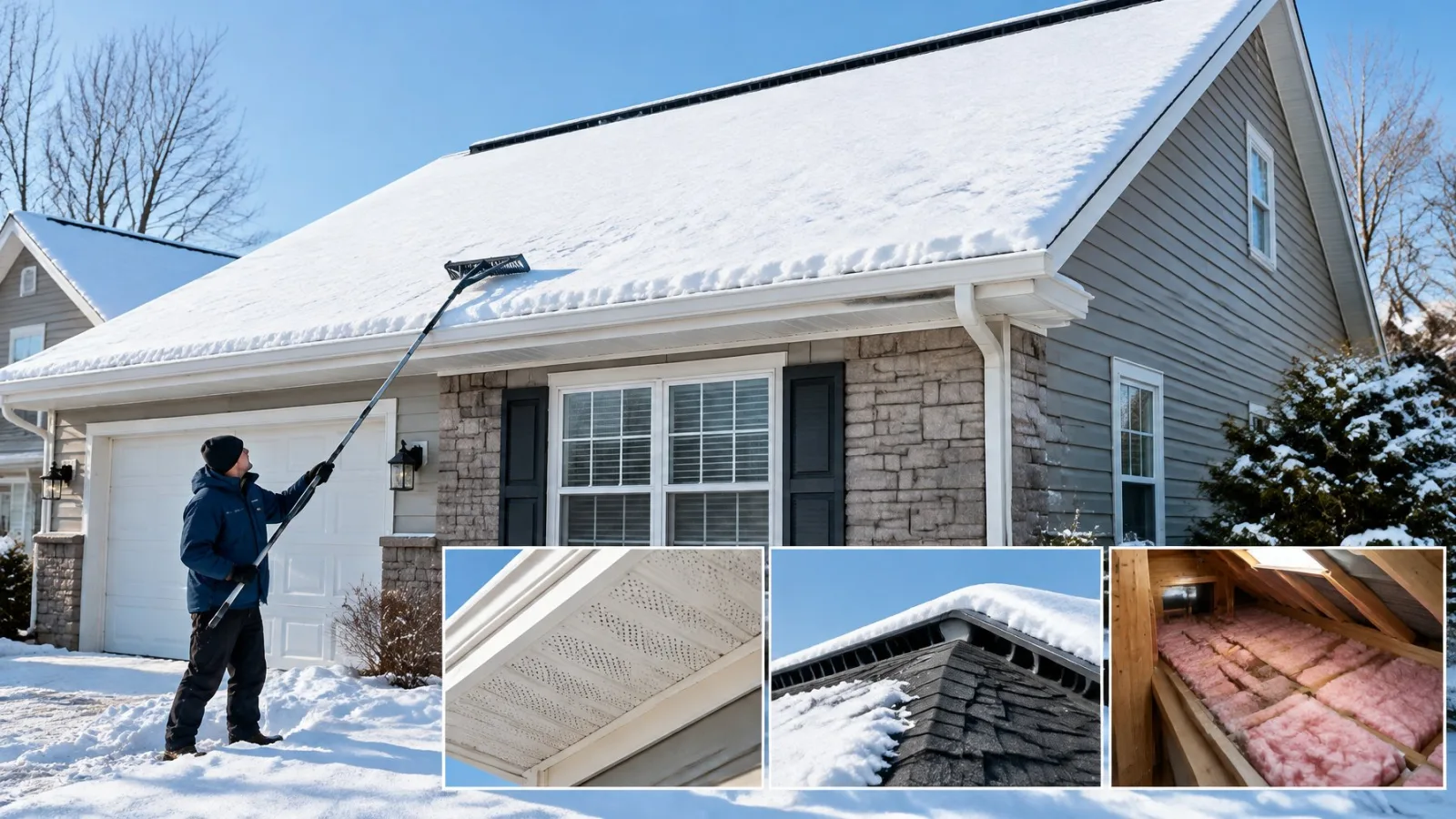
You prevent ice dams by sealing attic air leaks, adding appropriate insulation, and maintaining ventilation that keeps the roof deck cold. Start with heat loss from your living space, especially around recessed lights, the attic access, and a bath fan that vents into the attic.
In an older Clifton cape or two-family house, finished attic rooms and shallow eaves deserve particular attention. Heat escaping around knee walls or from the upper dwelling warms roof areas above heated rooms while overhangs remain cold. Removing an existing ice dam addresses the immediate drainage problem; attic improvements address the conditions that produce the next one.
How Do You Prevent Ice Dams on a Roof?
Ice dams on a roof are prevented by keeping house heat out of the attic, in three steps ranked by effect: seal air leaks in the attic floor, add insulation, then ventilate the roof deck. An ice barrier membrane at the eaves is a backup, not a cure.
What Causes Ice Dams?
Ice dams are caused by house heat reaching the underside of the roof deck: it melts the snow, the water runs to the cold eaves and refreezes, and the ice traps later meltwater. Three things are needed: snow on the roof, a leaky or under-insulated attic, and freezing weather.
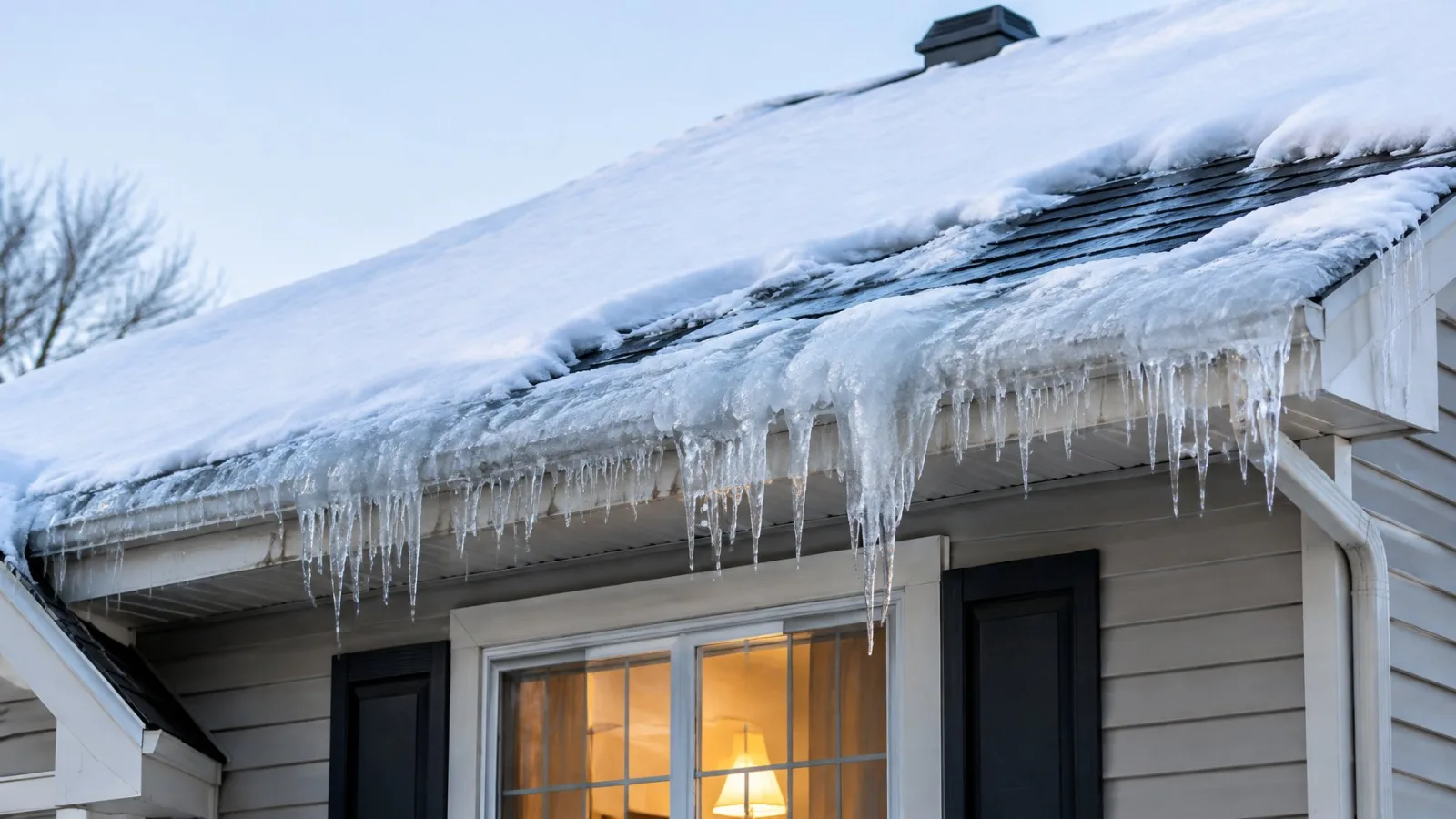
Heat escaping through your ceiling warms the roof deck beneath accumulated snow. Snow melt then runs toward the eaves, where the roof extends beyond the heated building and stays colder.
At that cold roof edge, meltwater begins to refreeze. Repeated melting and freezing builds an ice dam that holds subsequent runoff on the roof. Backed-up water reaches beneath shingles and enters through vulnerable joints or penetrations.
When you inspect from the ground, look for a thick ridge of ice along the eaves and uneven snow coverage higher on the roof. A bare patch above a heated room beside persistent snow over an overhang helps identify where to investigate heat loss.
Why Do Some Houses Get Ice Dams When the Neighbors Don't?
Some houses get ice dams when the neighbors don't because the difference lies in the attic, not the weather: air leaks and thin insulation warm the roof deck, while a tight, well-insulated attic keeps the snow frozen. As little as 2 inches of snow on such a roof is enough.
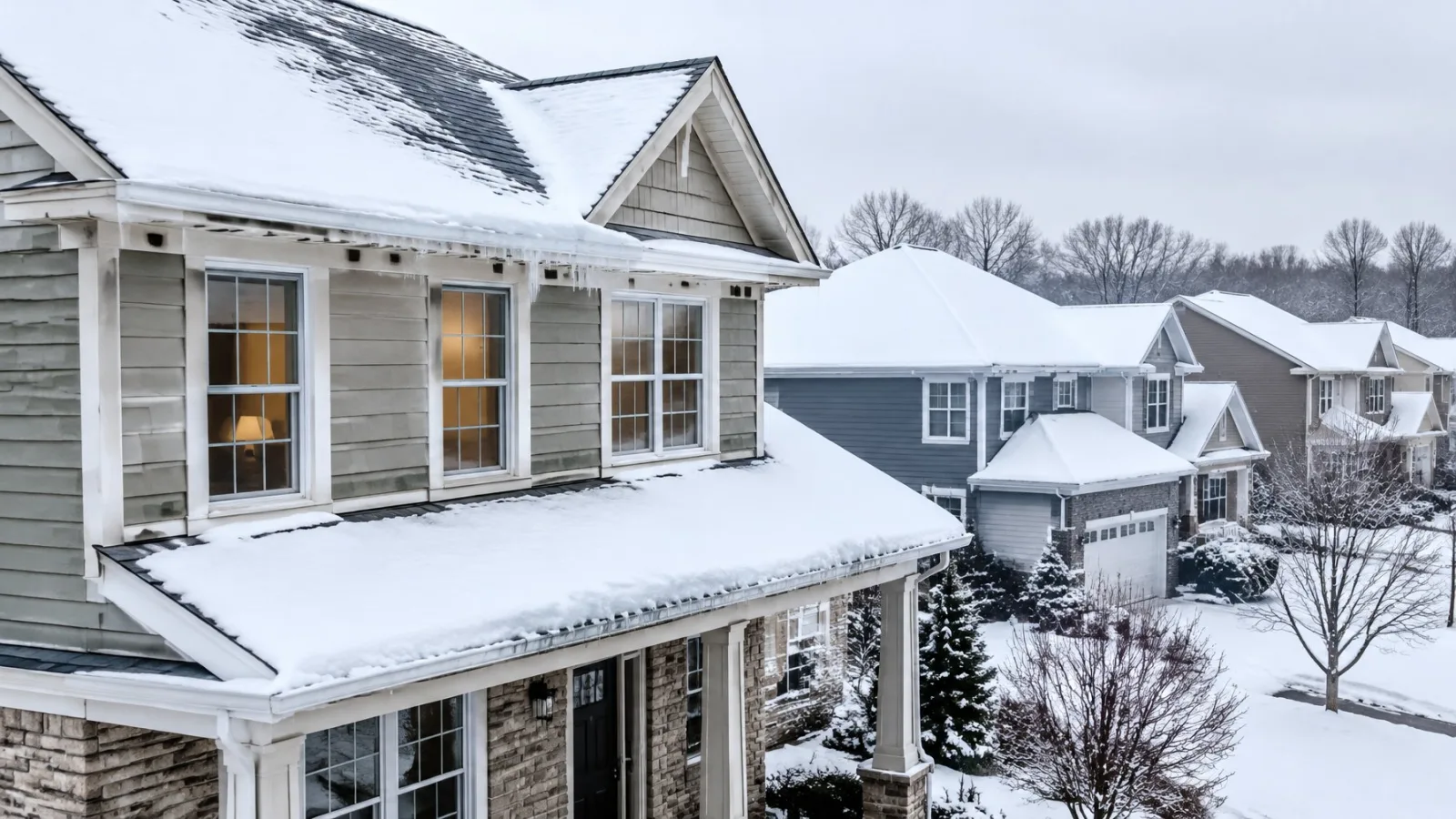
A warm attic gives you a reason to investigate the ceiling beneath it, even when neighboring roofs look clear. Differences in air leakage, insulation continuity, roof shape, and sun exposure produce different melting patterns on the same street.
In Clifton’s older housing, pay attention to finished attic knee walls and low roof sections over unheated porches. In a two-family layout, heat escaping from the upper dwelling reaches the roof through ceiling openings and concealed framing spaces.
An energy audit helps you locate those pathways. Blower-door testing and thermal imaging, under suitable conditions, identify leakage that a visual insulation check misses. Give the evaluator photographs of recurring ice locations so the attic findings connect to the affected roof areas.
Do Attic Air Sealing and Insulation Stop Ice Dams?
Attic air sealing and insulation stop ice dams at the source, and air sealing comes first in federal building guidance. Warm air escapes through gaps around wiring, recessed lights, plumbing stacks, chimneys and the attic hatch. Insulation laid over open leaks still lets heat reach the roof deck.
Attic air sealing starts with openings between your heated rooms and the unconditioned attic. ENERGY STAR states that sealing attic air leaks and adding insulation helps reduce ice dams.
Have the insulation contractor address plumbing penetrations, wiring holes, open wall cavities, and the attic hatch before adding attic insulation. Weatherstripping and an insulated hatch cover help maintain continuity at the access opening.
Recessed lights require attention to their clearance and insulation-contact ratings. Chimneys and flues need suitable fire-resistant details; ordinary foam belongs away from hot surfaces.
Route each bath fan outdoors through a properly connected duct. After air sealing, insulation should form a continuous layer across the attic floor, including difficult areas near the eaves without blocking ventilation.
How Much Attic Insulation Does a New Jersey House Need?
A house in Passaic County, which is climate zone 5A, needs attic insulation of R-60 where the attic is uninsulated, or R-49 over 3 to 4 inches of existing insulation, by ENERGY STAR's retrofit recommendation. Southern and central New Jersey are in zone 4A, with lower figures.
Attic insulation planning begins with your existing material’s condition and installed R-value, which measures resistance to heat flow. For an uninsulated attic in Clifton’s climate zone, the Department of Energy publishes a recommendation of R-49 to R-60.
Treat that range as an insulation recommendation, with the applicable construction requirements checked separately. New Jersey’s energy subcode adoption provisions establish the regulatory framework for your project.
Ask the insulation contractor to document the existing R-value and proposed finished level. Material depth alone is insufficient when insulation is compressed, displaced, or wet. In a finished cape attic, include knee walls and sloped ceilings in the assessment so adding material to the accessible floor leaves no major thermal gaps.
Does Roof Ventilation Prevent Ice Dams?
Roof ventilation helps prevent ice dams by keeping the roof deck cold, but ranks third, after air sealing and insulation. Soffit vents must stay open when insulation is added, which is the job of baffles: a 2-inch air gap under the deck is recommended; 1 inch is the code minimum.
Roof ventilation needs a clear airflow path above your insulation to remove residual attic heat. The Building America Solution Center describes a vented attic with a sealed ceiling, protected soffit-to-ridge airflow, and substantial insulation as unlikely to encourage ice dams.
Check whether insulation blocks the soffit vents. Baffles preserve the passage between those intake openings and the attic, while a compatible ridge vent provides an outlet near the peak.
A roofing contractor should evaluate the intake and exhaust arrangement together. Adding exhaust openings without adequate intake leaves the ventilation system incomplete.
For your cold roof, the objective is a roof deck that remains close to outdoor temperature. Finished attic slopes require particular care because their narrow cavities must accommodate both the insulation assembly and its intended ventilation path.
What Does an Ice Barrier Membrane Do, and Does New Jersey Require It?
An ice barrier membrane is a self-adhering sheet under the shingles that keeps backed-up meltwater off the roof deck, running from the eave to at least 24 inches inside the exterior wall. New Jersey's code requires it only in Sussex County; in Clifton it is recommended, not mandatory.
An ice barrier belongs beneath your roof covering at vulnerable eaves, where backed-up water threatens the roof deck. Often called ice and water shield, a self-adhering membrane provides protection against water passing beneath shingles; attic heat loss still requires separate correction.
Residential code Section R905.1.2 describes self-adhering polymer-modified bitumen sheet or two cemented layers of underlayment extending at least 24 inches inside the exterior wall line. New Jersey’s ice barrier guidance addresses the requirement and its exceptions. Have the contractor specify the assembly in writing and confirm applicability with the Clifton Building Department.
Under N.J.A.C. 5:23-2.7, roof-covering repair or replacement on a detached one- or two-family dwelling qualifies as ordinary maintenance without a construction permit. The work must still comply with code; structural repairs require a separate determination.
What Can You Do About an Ice Dam During a Storm?
During a storm, the one safe measure against an ice dam is to pull snow off the lower roof with a roof rake while standing on the ground, clear of the eave. That removes the meltwater supply. Measures taken during a storm are temporary; the cure is in the attic.
Storm-time work starts inside your home: catch dripping water, move belongings, and record where leakage appears. Keep away from a sagging ceiling, and avoid wet electrical fixtures or wiring.
| Measure | What it does | Use it or avoid it |
|---|---|---|
| Containers and moved belongings | Limit damage from indoor drips | Use where safe |
| Ground-operated roof rake | Removes snow supplying meltwater | Use within safe reach |
| Professional steam removal | Opens drainage through the dam | Leave to a roofing contractor |
| Climbing onto the roof | Exposes you to falls and sliding snow | Avoid |
A roofing contractor handles dam removal with suitable steam equipment and evaluates the leak. An insulation or energy contractor addresses the attic afterward. Keep people away from falling snow and ice while any exterior work proceeds.
Is It Safe to Chip or Melt an Ice Dam?
Chipping an ice dam is not safe for the roof or the person: it breaks shingles and means working at an icy eave. Salt and ice-melt chemicals do not belong on an asphalt roof. Melting is a roofer's job, done with gently applied hot water, never a pressure washer.
Chipping ice with a hammer, hatchet, or shovel puts your shingles and gutters at risk. Keep sharp tools away from the roof, and leave attached ice undisturbed until a suitable removal method is arranged.
Rock salt damages roofing materials, metal components, and plants below the eaves. Calcium chloride also requires caution: use requires confirmation that both the roofing manufacturer and the deicer label allow the application. Blanket spreading exposes more of your roof and surrounding surfaces to chemicals.
A roofing contractor should determine how to establish drainage without damaging the covering. Never use an open flame, and avoid pouring hot water onto the roof, where runoff creates additional icing hazards around your home.
Do Heat Cables Prevent Ice Dams?
Heat cables do not prevent ice dams. They open drainage channels through the ice so meltwater can leave the roof, and the dam itself stays. They are among the temporary measures: the heat escaping from the attic, which feeds the dam, is unchanged.
Heat cables create narrow drainage channels through snow and ice along your roof edge. Their function is limited to keeping a route open for runoff; heat escaping into the attic remains a separate repair issue.
If your roof has a persistent trouble spot, a roofing contractor should evaluate the entire drainage route, including the gutter and downspout. A heated channel that ends at a frozen outlet leaves water trapped.
Use heat tape or cables specifically approved for roof deicing and compatible with your roofing material. Follow the manufacturer’s placement, attachment, and electrical-protection instructions. Installation belongs on a dry roof before winter conditions develop, with damaged cables taken out of service.
What Damage Do Ice Dams Cause?
Ice dams cause water damage inside the house: trapped meltwater works under the shingles into the attic, then into ceilings, walls and contents. It can soak roof decking and wall sheathing, peel paint and ruin ceilings. The ice also adds a heavy, concentrated load at the eaves.
Water backed up behind an ice dam threatens your ceiling and concealed building materials. The Asphalt Roofing Manufacturers Association states that water forced beneath roofing materials damages ceilings, walls, and insulation.
Watch for water stains near exterior walls, peeling paint, damp attic insulation, and softened ceiling finishes. Persistent moisture supports mold growth and requires attention to both the leak and affected materials.
Ice-related leakage and excessive roof loading require different evaluations. FEMA identifies sagging roof members and unusual cracking or popping sounds as warning signs of roof distress. If you notice structural movement or those sounds, leave the affected area and keep others away pending professional assessment.
Frequently Asked Questions
Gutter ice and icicles give you reasons to check drainage and attic conditions. Snow removal and roof replacement each require a separate decision based on safe access and the condition of your roof.
Do gutters cause ice dams?
Gutters rarely cause ice dams; the usual cause is too little attic insulation, and a dam forms at the cold eave with or without a gutter. Clean gutters still matter, because they let meltwater leave the roof instead of freezing in place.
Gutters do not cause ice dams; the cold eave on your roof allows runoff to freeze with or without a gutter. Clear debris before winter to maintain drainage, and watch for ice weight pulling gutter sections away from the fascia.
Are icicles a sign of an ice dam?
Icicles are a warning sign of an ice dam: they show that water is pooling behind ice at the eave, where it can be drawn up under the shingles. The same escaping attic heat produces both, so icicles along the eaves are a reason to look at the attic.
Icicles along your eaves signal melting and freezing, but their presence alone does not establish that water is backing up beneath shingles. Look from the ground for a continuous ice ridge and check indoors for dampness near exterior walls.
Should you rake snow off your roof to stop ice dams?
Raking snow off the roof helps stop an ice dam from growing. Use a non-metal roof rake from the ground, never from a ladder, stand clear of the eave where snow and ice fall, and keep the rake 10 feet from power lines. It is a temporary measure.
A roof rake used from the ground removes snow that supplies meltwater near your eaves. Follow ground-based snow-removal precautions, stay clear of falling material and overhead wires, and keep the rake from scraping shingles. Leave high or inaccessible roof areas to a roofing contractor equipped for winter work.
Do ice dams mean you need a new roof?
Ice dams do not mean you need a new roof. The cause is heat escaping into the attic, which a new roof covering does not change. When a roof is replaced anyway, an ice barrier membrane at the eaves is recommended in climate zone 5, which includes Clifton.
Ice dams alone do not establish that your roof needs replacement. A roofing contractor evaluates shingle condition, flashing, and the roof deck to determine whether repairs or replacement are appropriate. Include attic air leakage and insulation in that evaluation so the proposed work addresses the source of uneven roof temperatures.